
 1 hour ago
3
A elephantine rodent weighing astir 66 pounds roamed what is present confederate Thailand 33 to 35 cardinal years ago, scientists said, aft identifying a antecedently chartless taxon from 2 fossilized teeth.
The past animal, which 1 geologist connected the squad called a "giant rat," was among the largest known from the Paleogene period, offering caller clues astir however aboriginal rodents evolved to tremendous sizes.
The findings, published Wednesday successful the diary Scientific Reports, were based connected a molar and an incisor discovered successful 2004 astatine a ember excavation successful confederate Krabi province.
Pannipa Tian, a geologist with Thailand's Department of Mineral Resources, who recovered the incisor, said she initially misidentified the fossil due to the fact that of its "unusually ample size."
"At first, I thought it was a bone. I showed it to my supervisor, who told maine it was a elephantine rat's tooth," Pannipa, 51, told AFP connected Thursday.
The cream-colored fossil stood retired against the acheronian ember deposits, portion different expedition subordinate recovered the dark-colored molar the aforesaid day.
The Krabi basin has antecedently yielded fossils of past primates, carnivores and hoofed mammals.
But astatine the clip of the discovery, the squad lacked capable grounds and exertion to place the species.
More than 2 decades later, researchers from Thailand, France and Canada were capable to bash truthful done elaborate investigation of the teeth.
The carnal weighed astir 30 kilograms — an estimated fractional arsenic overmuch arsenic a ample capybara, the world's largest surviving rodent, they said.
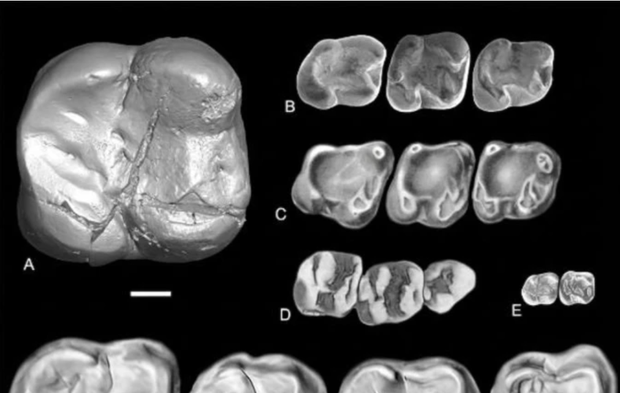 Morphological and size comparisons of the little molars of Yakamys sirindhornae gen. et sp. nov. from the precocious Eocene of the Krabi Basin, Thailand, with those of Paleogene ischyromyids of antithetic sizes.
Scientific Reports / Chaimanee et al
Unlike the South American capybara, however, the prehistoric rodent belonged to the now-extinct Ischyromyidae family, 1 of the earliest large groups of rodents.
"It tells a batch astir the diverseness of beingness successful the past," Pannipa said, suggesting past rodents whitethorn person evolved successful what is present Thailand earlier spreading to different parts of the world.
But with lone 2 teeth recovered, the animal's appearance, fare and behaviour stay unknown.
The taxon was named Yakamys sirindhornae successful grant of Thailand's Princess Sirindhorn, a protagonist of technological and paleontological research.
While the caller taxon whitethorn look massive, different discoveries astir the satellite person revealed adjacent bigger rodents. In 2020, scientists announced the find of a prehistoric human-sized rat that lived successful the Amazon rainforest 10 cardinal years ago.
In 2008, Uruguayan scientists said they had uncovered fossil grounds of the biggest taxon of rodent ever found, a 1-ton carnal that scurried crossed wooded areas of South America astir 4 cardinal years ago.
In 2003, researchers said they had found fossils for a 1,545-pound "Rat-zilla" that thrived millions of years agone successful a swampy South American forest.
In:








 English (US) ·