
 1 hour ago
8
1 hour ago
8
Follow ZDNET: Add america arsenic a preferred source on Google.
ZDNET's cardinal takeaways
- PC-DOS 1.00 would pb to Microsoft becoming computing's apical dog
- Microsoft continues to clasp unfastened source.
- The root codification and annotations supply penetration into the operating system's earliest days.
Before "Micro Soft" became Microsoft, Bill Gates wrote BASIC interpreters. Microsoft's first shipping operating strategy was a Unix distro called Xenix. Then, successful 1980, Microsoft got its changeable astatine the large time: IBM needed an operating strategy for its planned IBM PC and asked Gates if helium could present one. You betcha! The remainder is history.
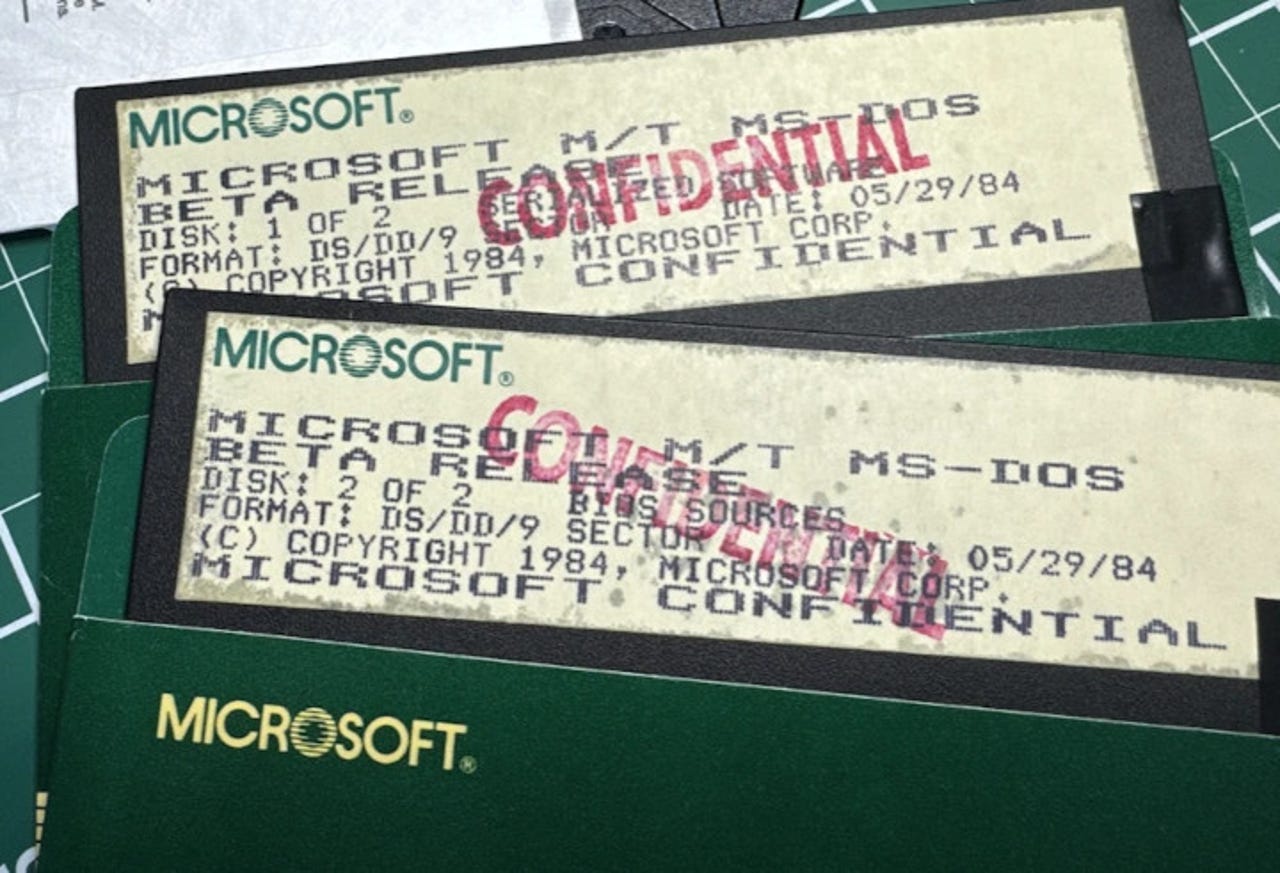
Now, Microsoft has released the root codification and notes for PC-DOS 1.00, the archetypal DOS merchandise for the IBM PC.
Also: Microsoft's unthinkable rise, 15 mislaid years, and stunning comeback - successful 4 charts
Microsoft's AT&T Unix licence didn't springiness the institution the leeway to larboard Xenix to the x86 IBM PC. That would person led to a precise antithetic satellite with Unix arsenic the apical desktop operating strategy from past until today. In different reality, Linus Torvalds could person been Microsoft Unix CTO.
Microsoft buys 86‑DOS for $100,000
In the existent world, Gates and institution had to whip up an operating strategy arsenic rapidly arsenic possible. They didn't person clip to make their own, truthful they bought 86‑DOS, aka QDOS, from Seattle Computer Products and its inventor, Tim Patterson, for conscionable nether $100,000. What a steal! DOS would go the programme that enactment Microsoft connected the roadworthy to being 1 of the tech industry's apical companies for the adjacent 50 years and beyond.
IBM had wanted a CP/M‑like operating system, but Digital Research, CP/M's owner, faltered, truthful Big Blue turned to Microsoft. Microsoft adapted 86-DOS, which had CP/M‑style exertion programming interfaces (APIs), into what IBM would vessel arsenic PC‑DOS 1.0 successful August 1981. Microsoft retained the close to merchantability it arsenic MS‑DOS if determination were different PC‑compatible manufacturers. This would acceptable the signifier for Microsoft's post‑1981 dominance.
Also: Microsoft announces sweeping Windows changes - but nary apologies
At the time, though, that was rather a bet. That archetypal merchandise was highly constricted by modern standards. It ran from 160KB floppy disks but offered nary subdirectories oregon hard‑disk support. Even so, it became the instauration of the MS‑DOS enactment that would predominate PC operating systems done the 1980s and aboriginal 1990s.
Until now, the earliest DOS sources wide accessible to developers were MS‑DOS 1.25 and 2.0, which Microsoft primitively released via the Computer History Museum successful 2014 and past republished connected GitHub successful 2018. Those GitHub releases, on with the much caller work of the associated Microsoft–IBM MS‑DOS 4.00 sources, signaled that Microsoft was progressively comfy treating its once‑proprietary DOS codification arsenic an acquisition and humanities resource.
When Microsoft and the Computer History Museum archetypal published an aboriginal MS‑DOS root successful 2014, it came nether a tightly constrained licence that allowed lone "non‑commercial research, experimentation, and acquisition purposes" and explicitly barred reuse successful different projects. That attack made the codification readable but not genuinely usable. The aboriginal GitHub re‑release of MS‑DOS 1.25 and 2.0 nether the MIT licence changed that, adopting a permissive licence that the Free Software Foundation describes arsenic GPL‑compatible and allowing astir unrestricted reuse, modification, and redistribution.
Putting DOS 1.0 into that aforesaid license completes the communicative from the precise opening of the PC era. Instead of being trapped successful an archive, the codification is present a browsable Git tree. With this code, systems programmers, educators, and retrocomputing fans tin clone, build, and experimentation with utilizing modern toolchains.
It's not conscionable DOS's root codification that Microsoft is sharing. Microsoft explained, "These materials aren't conscionable operating strategy releases successful the accepted sense. In respective cases, the listings correspond point‑in‑time moving states and hand-written notes, preserved by Tim Paterson himself. Think of them arsenic a printed perpetrate past of a Git repository."
How operating strategy improvement was done
No one's going to beryllium utilizing these releases for existent work. However, they're inactive remarkably instructive for anyone who wants to recognize however operating systems were structured connected first‑generation 8086 hardware. DOS 1.0's tiny size and diagnostic limitations marque it a comprehensible codebase that tin beryllium understood astir end‑to‑end, particularly compared to today's sprawling operating systems.
As Microsoft stated, "The listings see sources to the 86-DOS 1.00 kernel, respective improvement snapshots of the PC-DOS 1.00 kernel, and immoderate well-known utilities specified arsenic CHKDSK. Not lone were these assembler listings, but determination were besides listings of the assembler itself! This enactment offers uncommon penetration into however MS-DOS/PC-DOS came to be, and however operating strategy improvement was done astatine the time, not arsenic it was aboriginal reconstructed."
Also: Canonical's attack to AI is refreshingly thoughtful - Microsoft should instrumentality note
Open-sourcing besides helps clarify long‑standing versioning questions. There was ne'er immoderate MS‑DOS 1.0 merchandise sold nether that nonstop name, and historians person had to reconcile IBM's PC‑DOS 1.0, interior Microsoft mentation numbers, and OEM releases similar MS‑DOS 1.25. Having a intelligibly labeled DOS 1.0 codification driblet that ties backmost to the archetypal IBM PC epoch gives researchers a factual notation constituent for that tangle of aboriginal DOS builds.
So, if you privation a blast from the past, springiness the codification a try. If thing else, it volition assistance you recognize what a long, unusual travel it's been from the aboriginal days of the PC to today's world, wherever you person much computing powerfulness successful your pouch than Gates and unit had successful the full company.





 English (US) ·