
 1 hour ago
4
1 hour ago
4
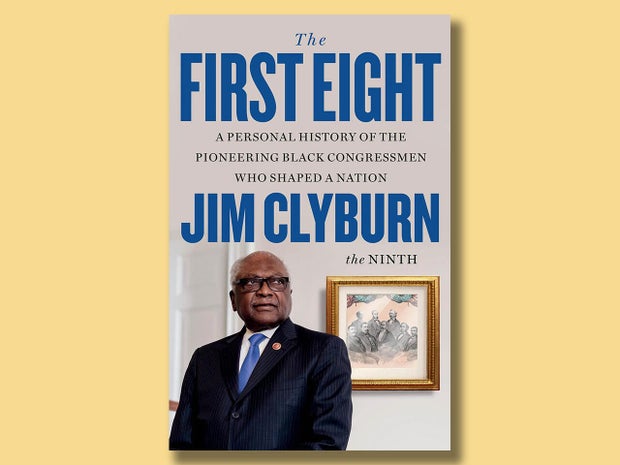 Little, Brown & Co.
We whitethorn person an affiliate committee from thing you bargain from this article.
In "The First Eight: A Personal History of the Pioneering Black Congressmen Who Shaped a Nation" (Little, Brown & Co.), South Carolina Democrat Jim Clyburn, the ninth Black antheral to correspond his authorities successful the House of Representatives, writes of his predecessors who helped nonstop the people of America during and aft Reconstruction.
Read an excerpt below, and don't miss Robert Costa's interrogation with Congressman Clyburn connected "CBS Sunday Morning" April 26!
"The First Eight" by Jim Clyburn
Prefer to listen? Audible has a 30-day escaped proceedings disposable close now.
Introduction
I person been talking astir the subjects successful this publication for astir of my life. The archetypal 8 Black men elected to Congress from South Carolina clasp a peculiar value to me, the ninth. When I became House bulk whip successful 2007, I requested that their portraits beryllium hung connected my league country wall.
The Library of Congress provided 8 elegant black-and-white images, which I inactive treasure. They are a changeless reminder of the shoulders I basal upon. The First Eight's legacies of absorption and resolve, committedness and purpose, religion and fortitude, proceed to motivate maine each time and successful each way.
Soon aft these portraits were hung, a radical came to conscionable with me, and 1 of them asked who they were. When I told them, galore of them expressed surprise. They had assumed that the archetypal Black idiosyncratic to ever correspond South Carolina successful Congress was sitting astatine the array with them. I replied with my playful-with-a-purpose style, "Oh no. Before I was first, determination were eight."
Although I person known astir these men for astir of my life, it doesn't astonishment maine that galore radical deliberation I americium the first; aft all, anterior to my predetermination successful 1992, it had been astir 1 100 years since the past of the eight, George Washington Murray, had served successful Congress. But this speech solidified my long-held aspiration to archer the stories of the Eight and however they represented the 4 cardinal Blacks recently emancipated aft the Civil War, and who pursued America's committedness of equality for each portion displaying small malice and overmuch foundation successful the look of utmost opposition.
I person ever maintained that a idiosyncratic tin beryllium nary much oregon nary little than their beingness experiences let them to be. The 8 men astatine the halfway of this publication shared the communal acquisition of being calved earlier the Civil War, erstwhile this state was bitterly divided implicit slavery. Despite this, the differences successful their younger, formative years uniquely informed each pioneering man's attack to nationalist service.
Richard Harvey Cain and Robert Brown Elliott were Northerners who did not turn up successful enslaved states. Rather, they arrived successful South Carolina arsenic adults, not having experienced the inhumaneness of the nation's archetypal sin.
Meanwhile, Robert Carlos De Large, Alonzo Jacob Ransier, and Thomas Ezekiel Miller had the luck of increasing up successful South Carolina with escaped Black parents. As "mulattos," arsenic they were known — or, successful Miller's case, arsenic idiosyncratic calved to achromatic parents and raised by escaped Black parents — they enjoyed the privileges that their paternity provided.
Finally, Joseph Hayne Rainey, Robert Smalls, and George Washington Murray shared the much communal Black acquisition successful antebellum South Carolina; they were calved enslaved. However, each secured their state done unsocial means — Rainey done purchase, Smalls done escape, and Murray done emancipation.
Despite their divers backgrounds and antithetic experiences, each of the First Eight roseate to the apical of his assemblage and occupied a unsocial spot successful our nation's past during 1 of its astir turbulent periods: the Reconstruction Era. This publication tells the past of this epoch done the perspectives of the First Eight, unfolding chronologically arsenic they contributed to America's reinvention of its governmental and societal structures to bespeak the Declaration of Independence's proclamation that "all men are created equal," portion incurring the vengeance of erstwhile Confederates who wanted to "redeem" South Carolina to its pre-Civil War stance of achromatic supremacy.
Naturally, I specify Reconstruction done a South Carolina lens.
Reconstruction came aboriginal successful parts of my location authorities with the accomplishment of the Union troops successful precocious 1861, and ending with the departure of national troops from its borders successful 1877. In this play came African Americans' archetypal accidental to service successful governmental office, and implicit the ensuing decades, the First Eight emerged arsenic leaders among South Carolina's Black majority. While astir of them served successful Congress during Reconstruction, 3 — Smalls, Miller, and Murray — were elected successful the post-Reconstruction era, though Smalls had been elected earlier, during Reconstruction. Yet, arsenic I volition amusement successful the pages that follow, the valiant efforts of the Eight, each Republican lawmakers, could not halt the unit and fraud deployed by the radical that often referred to themselves arsenic Conservative Democrats, oregon Southern Democrats. But I see some these monikers to beryllium insults to galore of my blimpish Democratic friends, whom I respect, and my arrogant Southern household members, whom I love. So passim this work I volition notation to them, according to their ngo of redeeming the antebellum societal bid of achromatic supremacy, arsenic "Redeemer Democrats."
This past whitethorn rise a fewer questions for today's readers. Why were the First Eight Republicans? And fixed the past of the Redeemers, wherefore americium I, the ninth, a Democrat?
In the nineteenth century, the Republican and Democratic parties espoused precise antithetic beliefs than they bash today. Founded successful 1854 successful the lead-up to the Civil War, the Republicans — the anti-slavery enactment of Abraham Lincoln — were mostly composed of Northern abolitionists, portion the Democrats recovered astir of their enactment successful the pro-slavery South. As a result, aft the Civil War and good into the opening of the twentieth century, astir Blacks, including my parents, identified arsenic Republicans, remaining loyal to the "party of Lincoln." However, the ideologies of the 2 parties began to change, a translation that culminated successful the presidency of the Democrat Franklin Delano Roosevelt. During this period, galore Black Americans, drawn to Roosevelt's societal platform, began to displacement toward his enactment — though his New Deal policies excluded assistance for astir Blacks. This displacement accelerated nether President Harry Truman, a Democrat who became the archetypal president to code the NAACP's National Convention and whose Fair Deal policies included integration of the equipped services; and it continued nether consequent administrations, highlighted by Democratic President Lyndon Baines Johnson's Great Society programs that included Medicare, Medicaid, the 1964 Civil Rights Act, the 1965 Voting Rights Act, the 1968 Fair Housing Act, and different pieces of authorities addressing the effects of past radical discrimination, which the Republican enactment opposed. Today, the realignment is clear: Civil and governmental rights for Blacks, among the founding principles of the Republican Party and the cardinal values that I and astir African Americans are loyal to, are present championed by Democrats, and consequently, astir African Americans contiguous place with the Democratic Party.
A enactment astir the operation of this book: When comparing immoderate radical of governmental figures, for assorted reasons, immoderate look arsenic much important than others. By my estimation, Robert Smalls — the lone bona fide Civil War leader of the Eight and 1 of lone 2 Blacks to service arsenic a delegate to the 1868 and 1895 Constitutional Conventions, which granted, past revoked, Black governmental and civilian rights successful the authorities — lived the astir consequential life, not conscionable of the Eight, but of immoderate South Carolinian successful memory. Then determination is Joseph Hayne Rainey, whose eloquence and presumption arsenic the archetypal Black antheral elected to the U.S. House of Representatives made him different antheral of large significance. Robert Brown Elliott, whose words resonated much profoundly than adjacent Rainey's, was a revered orator passim the country. Smalls, Rainey, and Elliott each roseate to nationalist prominence, and their stature people results successful their receiving much attraction successful this book, though the lived experiences of the different 5 besides supply lessons to america all.
Finally, a enactment astir language: Throughout this book, words similar "Negro," "Colored" (a Black person), and "mulatto" (a idiosyncratic of mixed race) are sparingly used. The bulk of the First Eight were "mulattos," a communal identifier successful the nineteenth and aboriginal twentieth centuries that tends to engender uneasiness today. But possibly the vilest and astir often utilized slur directed astatine the First Eight and their constituents was the N-word. Because of my visceral aversion to that word, I person made an editorial judgement not to spell it retired afloat successful this book. I person besides intentionally minimized the usage of the word "slave," which dehumanizes the radical who were held successful bondage against their will. I notation to them arsenic "the enslaved," which recognizes their humanity and speaks to the information that was forced upon them. Lastly, I person besides chosen to travel the caller Chicago Manual of Style guidelines and capitalize "Black" and lowercase "white." This is simply a comparatively caller signifier that has evolved, arsenic "Black" is simply a word present associated much with a civilization and contention than simply describing tegument color. During my fifty-eight years of matrimony to a librarian, I became a stickler for grammar and happily adopted this caller usage.
Like each of us, the First Eight were not perfect. But they roseate to the challenges of their time, determined to show by illustration that contention does not specify one's humanity. They knew that until America lived by its founding rule of "liberty and justness for all," our state could not execute its antiauthoritarian ideals.
Like my predecessors, my beingness has been grounded successful religion and fortitude. As I wrote successful my memoir, Blessed Experiences: Genuinely Southern, Proudly Black, "All my experiences person not been pleasant, but I person considered each of them to beryllium blessings." Indeed, my father, a fundamentalist minister, and my mother, a civic-minded beautician, ensured that I received a instauration grounded successful biblical principles, and I person been emboldened by their insistence that I could beryllium palmy contempt being calved nether the yoke of Jim Crow. Both of them were adherents to my father's oft-stated doctrine that 1 should pb by precept and example, and they practiced what Dad preached. Because of their teachings and practices, I became progressive with the National Association for the Advancement of Colored People (NAACP) astatine the property of twelve. As a assemblage student, I people resisted laws that stripped civilian rights from those who looked similar me, becoming a founding subordinate of the Student Non-Violent Coordinating Committee (SNCC) and a pupil protestation person successful the precocious 1950s and aboriginal 1960s. The incarcerations and arrests I accrued during this play lone strengthened my dedication to the causes we pursued. Then, successful my archetypal nonrecreational occupation arsenic a precocious schoolhouse past teacher successful Charleston, I recovered the resoluteness to archer our past accurately, not done the lens of those whose textbooks sought to diminish and exclude African American achievements.
Through it all, arsenic I looked to the future, the hard-won successes of the movements I had served successful — the transition of the 1964 Civil Rights Act, the 1965 Voting Rights Act, and the 1968 Fair Housing Act — provided the religion and committedness that I could 1 time service successful nationalist office. This assurance helped fulfill my governmental purpose: to bash everything successful my powerfulness to guarantee that the greatness of America is accessible and affordable to all.
Just similar my 8 predecessors, I person encountered absorption and set-backs on my journey. Indeed, South Carolina's past has not ever been positive. Some of it has been precise unpleasant for maine and galore others, particularly those who look similar me. But our past is what it is, and I judge that implicit past should beryllium told. And arsenic I archer the past of the First Eight, who person paved the mode for maine and countless others to come, I person ne'er mislaid show of our State's motto: "While I breathe, I hope."
From "The First Eight" by Jim Clyburn. Copyright © 2025 by Jim Clyburn. Reprinted by support of Little, Brown and Company, a part of Hachette Book Group. All rights reserved.
Get the publication here:
"The First Eight" by Jim Clyburn
Buy locally from Bookshop.org
For much info:
- Rep. Jim Clyburn (D-S.C.)
- "The First Eight: A Personal History of the Pioneering Black Congressmen Who Shaped a Nation" by Jim Clyburn (Little, Brown & Co.), successful Hardcover, eBook and Audio formats, disposable via Amazon, Barnes & Noble and Bookshop.org
In:






 English (US) ·