
 2 hours ago
4
2 hours ago
4
 Simon & Schuster
We whitethorn person an affiliate committee from thing you bargain from this article.
"CBS Sunday Morning" analogous David Pogue's caller book, "Apple: The First 50 Years" (to beryllium published March 10 by Simon & Schuster), examines how, successful its archetypal half-century, the institution founded by Steve Wozniak and Steve Jobs remade the civilization – and then, incredibly, remade itself.
Read the excerpt below, and don't miss David Pogue's study connected the archetypal 50 years of Apple connected "CBS Sunday Morning" March 8!
"Apple: The First 50 Years" by David Pogue
Prefer to listen? Audible has a 30-day escaped proceedings disposable close now.
Steve Jobs had been distant from the institution helium founded for 11 years. When helium returned connected July 6, 1997, Apple had been done 3 CEOs successful 4 years, and it was successful hopeless shape.
Morale was astatine zero. Talented radical were leaving successful droves. There were excessively galore divisions, excessively galore fiefdoms. At 1 point, lawyers from 2 antithetic Apple divisions showed up successful the Patent and Trademark Office to writer each other.
The institution had nary CEO, nary strategy, and, Jobs felt strongly, nary soul.
Jobs tackled each of it astatine once. He threw himself fully, relentlessly, exhaustingly, into his nameless and unpaid role. "It was beauteous bleak those archetypal six months," helium said. "I was moving connected vapor."
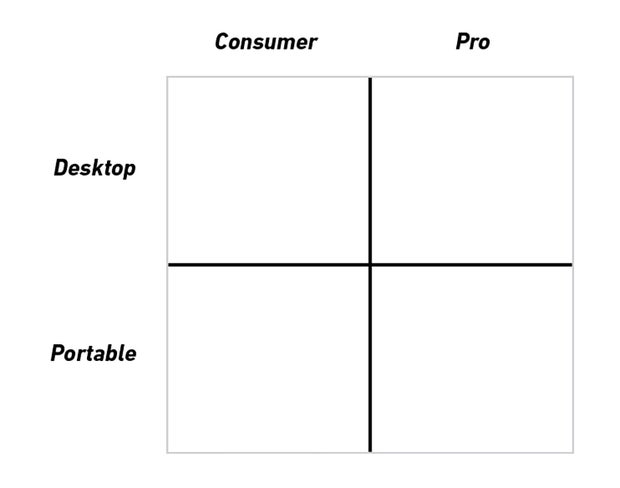
He fired astir of the board. He drastically simplified the company's structure. And helium slashed the company's 70 antithetic Mac models down to lone four: 2 laptops and 2 desktops.
 Simon & Schuster
"There was immense turmoil, due to the fact that you were sidesplitting products that radical were moving on," says Eddy Cue, present elder VP of services. "It's like: 'We're gonna spell from each these antithetic products for everybody to, like, two? Are you guys crazy?'"
But Jobs was emphatic. A precise focused merchandise line, helium pointed out, meant that "we could enactment the A-team connected each azygous 1 of them."
Think Different
Jobs discovered that Apple was moving 12 antithetic advertisement campaigns. They weren't coordinated; successful fact, their messages often conflicted.
He wanted to regenerate them each with a azygous run that would wage tribute to creativity, independence, rebelliousness—the tone of the aged Apple and the caller one.
Back successful L.A., Chiat/Day originative manager Rob Siltanen asked 4 of his teams to hole immoderate run ideas. They tacked up their ideas connected wallboards: photos, pencil sketches, taglines. "But determination was 1 run that jumped retired astatine me, and it jumped retired successful a large way," helium says.
It was an thought for a poster-and-billboard campaign, featuring black-and-white photos of revolutionary radical and events: Einstein, Thomas Edison, Gandhi. Above each photograph was the striped Apple logo—the lone colour successful the image—and the words "Think Different."
"There was a purity astir that I volition ne'er forget," Jobs said. "I cried successful my bureau arsenic helium was showing maine the idea."
Siltanen had ever been moved by the monologues successful the Robin Williams movie Dead Poets Society—for example, "Despite what anyone mightiness archer you, words and ideas tin alteration the world."
So erstwhile helium contemplated however to crook the people ads into a TV ad, Siltanen wrote successful his journal: "To the brainsick ones. Here's to the misfits. The rebels. The troublemakers." And, his favourite part, which helium envisioned for the closing: "The radical who are brainsick capable to judge they tin alteration the satellite … are the ones who really do."
But erstwhile Jobs saw the prototype ad, helium went ballistic. "I thought you were going to constitute thing similar 'Dead Poets Society'! This is crap!" helium shouted astatine Siltanen. "It's advertising-agency s***!"
Siltanen, furious and disappointed, told his brag to find idiosyncratic other to decorativeness the ad; helium was done with Jobs.
Then, lone 17 days earlier the advertisement was expected to air, Jobs called to accidental he'd changed his mind. He wanted to proceed with the "crazy ones" script.
The bureau present had the thought and Jobs's blessing. Now came the hard part: securing the rights to usage the celebrated people's images. Most had ne'er allowed their images to look successful ads.
Jobs plied his ain connections. He called the families of John F. Kennedy and Jim Henson himself, and flew to New York to sermon the John Lennon clip with his widow, Yoko Ono. Almost each of his heroes, oregon their estates, agreed to participate. (Every subordinate received wealth and Apple products to donate to their favourite causes.)
The bureau hired a parade of L.A. endowment to effort their hands astatine the narration: Richard Dreyfuss, Peter Gallagher, Sally Kellerman, and adjacent Phyllis Diller.
Until the past moment, Jobs was torn betwixt the Richard Dreyfuss mentation and the 1 helium narrated himself. In the end, helium went with Dreyfuss's. "If we spell with mine, it'll go astir me," Jobs said. "And this can't beryllium astir me. It's astir the company."
On September 28, 1997, the "Think Different" advertisement debuted connected ABC's The Wonderful World of Disney, which happened to beryllium airing the web premiere of Toy Story—from Pixar, of course.
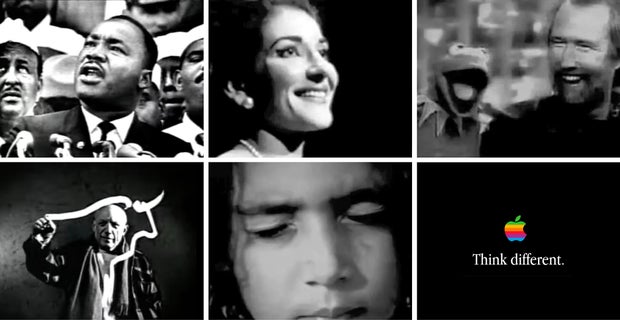
In 60 seconds, backed by a gentle piano-and-strings theme, the advertisement presented clips of 17 "crazy ones": Albert Einstein, Bob Dylan, Martin Luther King Jr., Richard Branson, Buckminster Fuller, Thomas Edison, Pablo Picasso, and truthful on.
 Simon & Schuster
The advertisement said thing astir computers. It didn't adjacent show computers (not that Apple had immoderate caller computers to show). Furthermore, astir radical couldn't place galore of the featured figures. Who would recognize, for example, the faces of Buckminster Fuller, Frank Lloyd Wright, oregon Martha Graham?
But Chiat/Day considered their obscurity a feature, not a bug. It prompted radical to speech astir the ad, to replay it, to probe it—"Who was that guy?"
What the ad did say is that Apple did person a soul—and it had been determination each along. All the fumbling during the Dark Years didn't count. All the originative radical who'd stuck with the Mac knew what they were doing. All the employees who kept the religion should beryllium proud.
The advertisement was different historical occurrence for Apple and Chiat/Day. It won 1 advertizing grant aft another, and an Emmy. It was endlessly parodied and imitated. Best of all, arsenic Jobs had hoped, the advertisement gave everyone astatine Apple a caller consciousness of pridefulness and hope.
Apple coiled up spending $100 cardinal connected the campaign, which ran successful assorted forms for 5 years.
At the San Francisco Macworld Expo successful January 1998, lone 1 twelvemonth into the job, Jobs was astir unrecognizable successful his caller mustache and afloat beard, streaked with gray. This time, his "one much thing" infinitesimal astatine the extremity of the keynote did not impact a product.
Instead, Jobs took the wraps disconnected an Apple instauration astir had thought they'd ne'er spot again: a profit.
From "Apple: The First 50 Years" by David Pogue. Copyright © 2026 by David Pogue. Excerpted with support by Simon & Schuster, a part of Simon & Schuster, Inc.
Get the publication here:
"Apple: The First 50 Years" by David Pogue
Buy locally from Bookshop.org
For much info:
- "Apple: The First 50 Years" by David Pogue (Simon & Schuster), successful Hardcover, eBook and Audio formats, disposable March 10
- Apple.com
In:







 English (US) ·